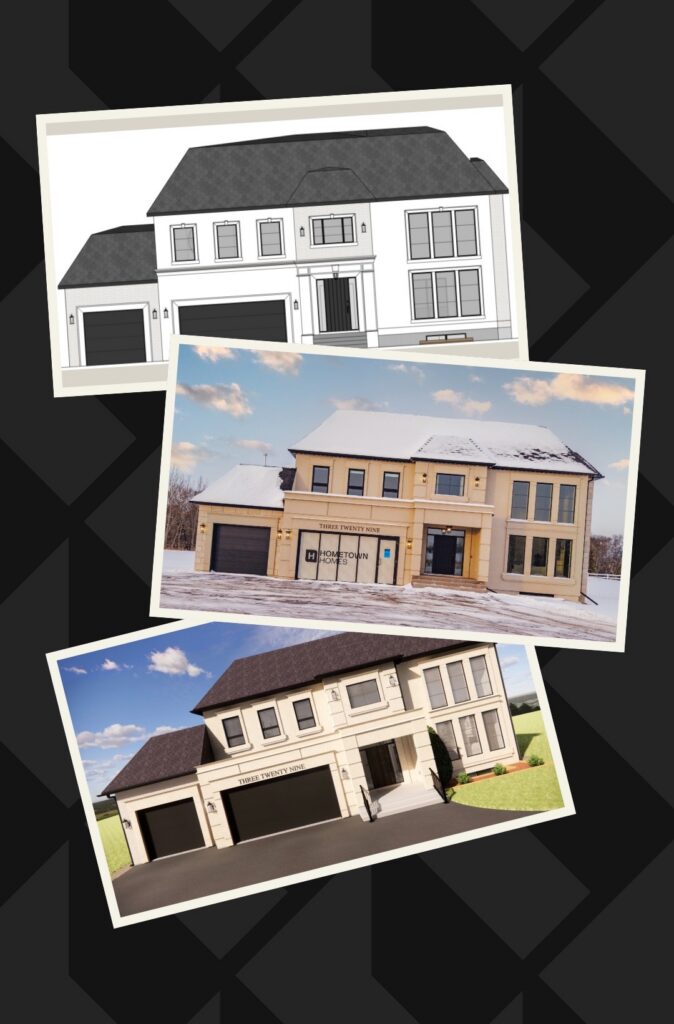
You’ve finally decided to build your custom home
After years of Pinterest boards, saving ideas, stalking neighbourhoods, and saying things like “One day…” it’s finally happening.
So naturally, once the process starts, you want to get moving.
You want drawings. You want pricing. You want construction. You want to stop mentally arranging furniture in a house that doesn’t exist yet.
Then someone says: “The Design Phase will take several months.” And suddenly you’re wondering… what could possibly take that long? Can I find someone who will do it quicker?
Here’s the truth: True design is not about drawing a house. It’s about removing all assumptions and uncertainty.
And that takes far more work than most people realize.
The Biggest Myth About “Design”
Most people think design means getting a floor plan, choosing paint colours, picking finishes, and looking at pretty renderings. That’s the glamorous part.
What people don’t see is the mountain of work happening underneath.
Because true design is the giant middle section that connects your floor plan to the final home you walk into.
It’s the part that prevents things like: “Oh no… I wish this didn’t have to go there.”
Or everyone’s favourite: “We’ll just deal with it during construction.” That sentence alone has financially humbled many people.

Design is Basically Creating an Instruction Manual for a One-of-a-Kind Product
Think about assembling furniture from IKEA.
Now imagine there are no instructions, the product has never existed before, 40+ people need to work on it, and it costs over a million dollars.
That’s custom home design.
Every detail must be thought through, coordinated, documented, revised, approved, and communicated before construction starts.
6 to 12+ months of planning and coordination
300 to 500+ pages of documentation
400+ tracked decisions and line items
And that’s before construction even begins.
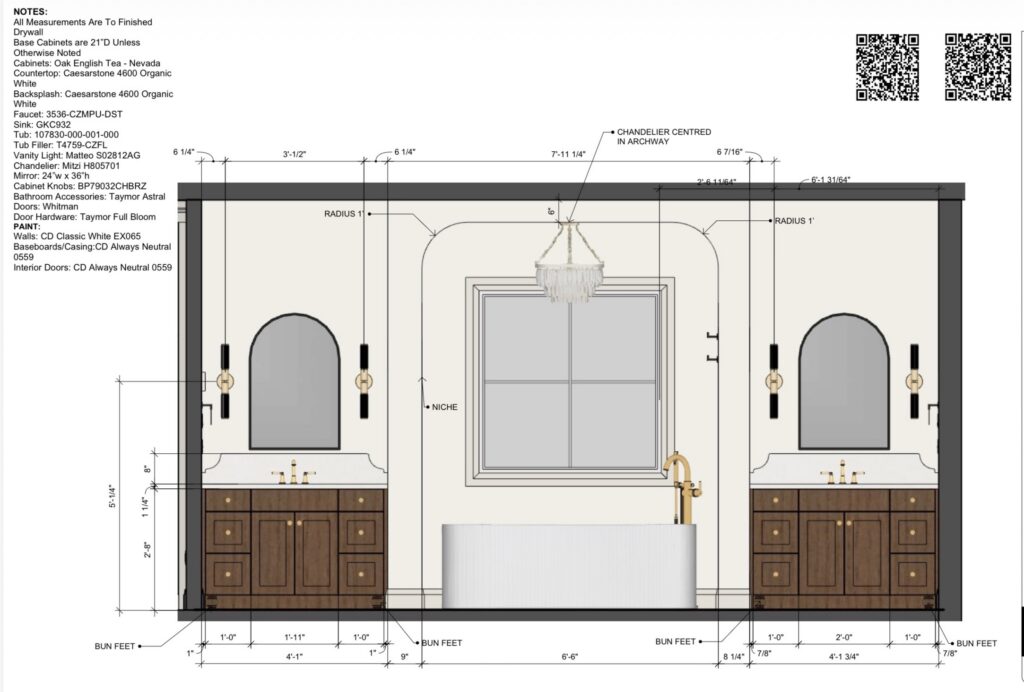
The final design package includes floor plans, electrical plans, cabinetry elevations, tile layouts, paint schedules, lighting specifications, engineering details, energy modelling, millwork drawings, appliance specifications, and more.
And yes… every single page matters.
The “Snowball Effect” Nobody Sees
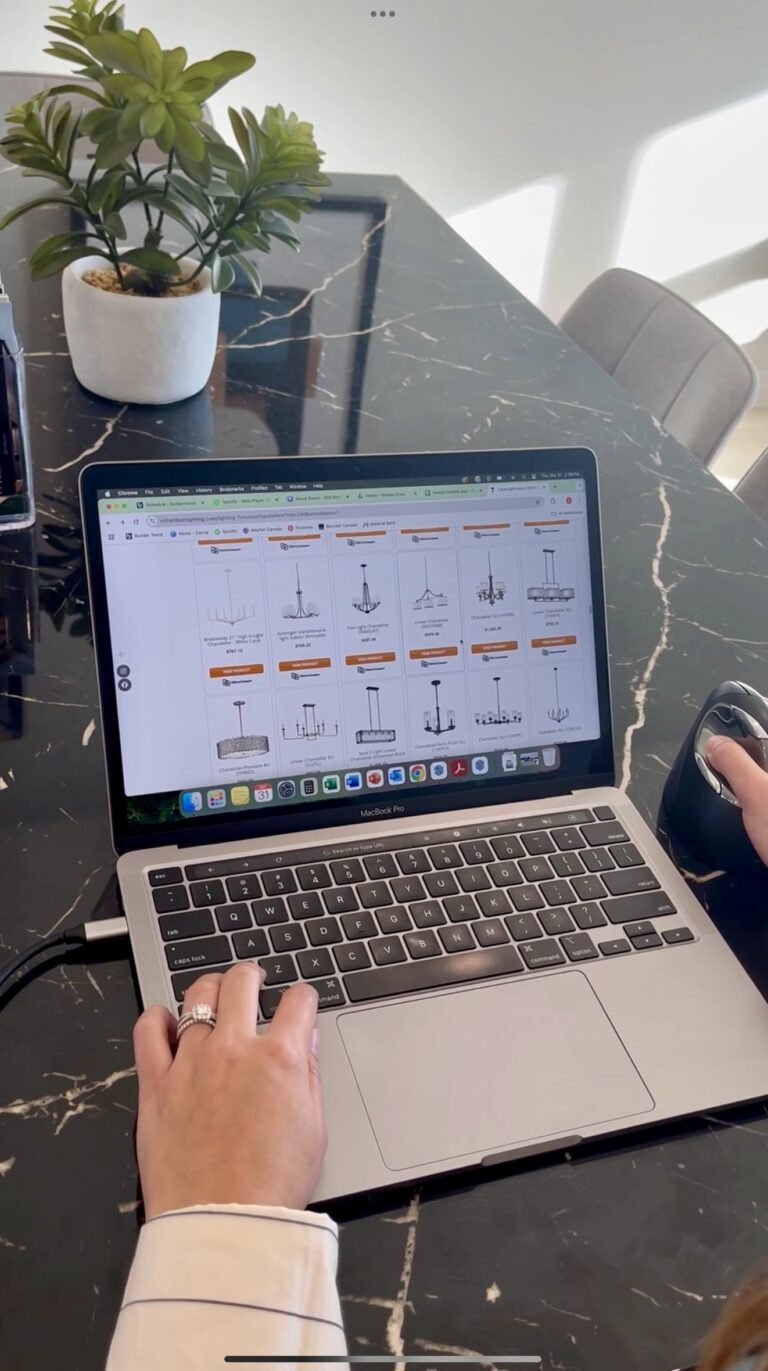
Let’s say you pick a light fixture.
Simple enough, right? Not exactly.
Now someone needs to determine the rough-in height, switch locations, spacing, installation details, vendor information, pricing, and how it affects the electrical plan.
Then all of that gets documented inside Buildertrend. And that’s ONE light fixture.
Now multiply that by the rest of your light fixtures, faucets, tile, flooring, cabinetry, appliances, hardware, paint, trim, wallpaper, countertops, mirrors, fireplaces, and plumbing fixtures.
Suddenly “design took forever” starts making a little more sense.
Decision Fatigue is Real
At first, picking things is exciting. You’re looking at:
Tile
Flooring
Lighting
Faucets
Hardware
Paint
Cabinetry
Countertops
Wallpaper
Mirrors
Plumbing fixtures
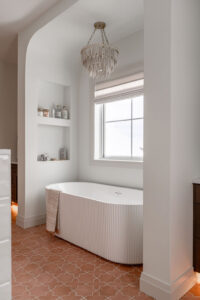
Fun. Then suddenly it’s: “Wait… why are there 4,000 faucets?”
Now imagine trying to build a custom home without a design team helping you.
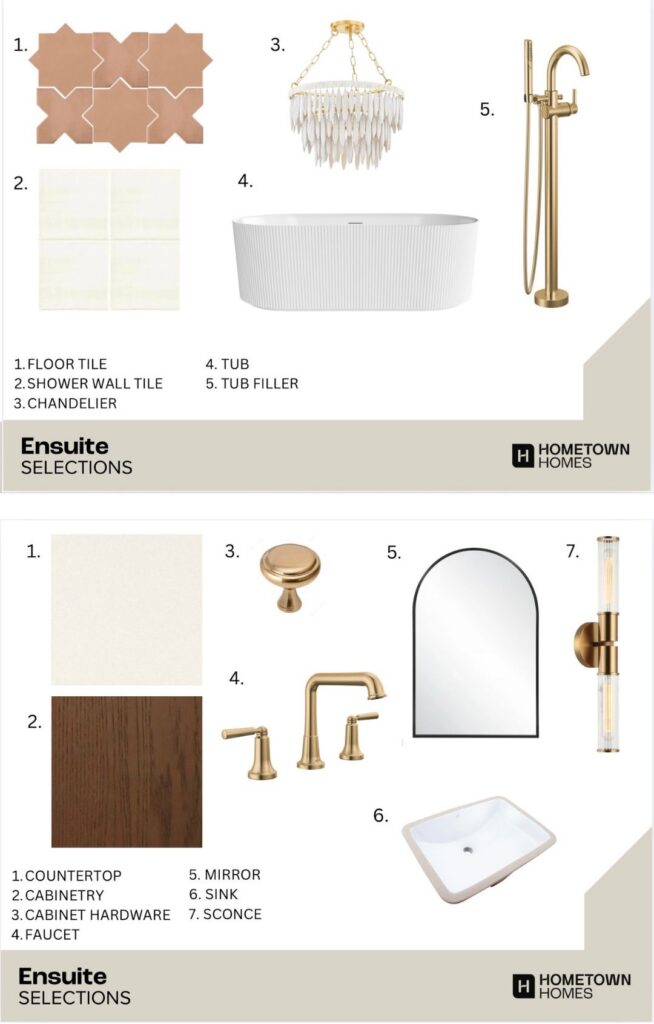
You’d be driving all over the city visiting:
Plumbing suppliers
Lighting showrooms
Flooring stores
Tile shops
Cabinet companies
Countertop suppliers
Appliance stores
…while trying to figure out:
What works together
What fits your budget
What suits your home’s style
What’s actually available
What has a reasonable lead time
And what won’t completely wreck the overall design
That’s where people quickly realize: “Oh. This is a full-time job.” Because building a true custom home involves hundreds and hundreds of decisions.
Even when you do hire a design firm or design-build company, all 400+ decisions still need to be made, and yes, that can absolutely still feel overwhelming.
The difference is: Your designer has already gone into the wilderness of options for you. They’ve already:
Combed through thousands of products
Narrowed down selections
Filtered out options that don’t fit your vision
Eliminated products outside your budget
Coordinated finishes that work together
And created a curated direction that makes decision-making manageable

Instead of showing you 4,000 faucets, they might show you:
4 that fit your style
2 that fit your budget
And 1 they know will actually work with the rest of the home
That’s another huge reason the design phase takes time. A professional design team isn’t just drawing plans. They’re:
Narrowing down options
Guiding decisions
Protecting your budget
Coordinating selections
Eliminating expensive mistakes
And preventing you from spiraling into a Pinterest-induced identity crisis at 11:30 p.m. Very important work.
Most Clients Only See the Fun Part
Clients usually just see the 3D walkthrough, design boards, finish selections, and beautiful renderings.
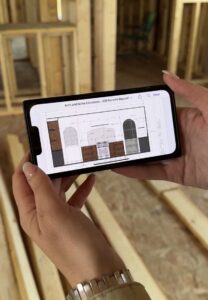
Meanwhile, behind the scenes, the team is producing technical drawings with appliance integration details, electrical coordination, cabinetry layouts, feature wall details, trim specifications, and energy modelling.
Before construction even starts, we’re already calculating insulation performance, HVAC sizing, ventilation requirements, heat loss, window efficiency, and airtightness targets.
That’s not decorating. That’s engineering your future utility bills.
Pricing Isn’t One Step Either
People think pricing is simple: Look at plans and throw out a number.
A benefit to working with a design-build firm is that pricing towards your allowances actually happens in the Design Phase, not at the very end like if you’re working with a design firm who then sends out your design for quoting, only to find that you’ve over designed and your home will cost 2x more than you hoped. Here’s how we break down our pricing process:
1. Selection Pricing During Design
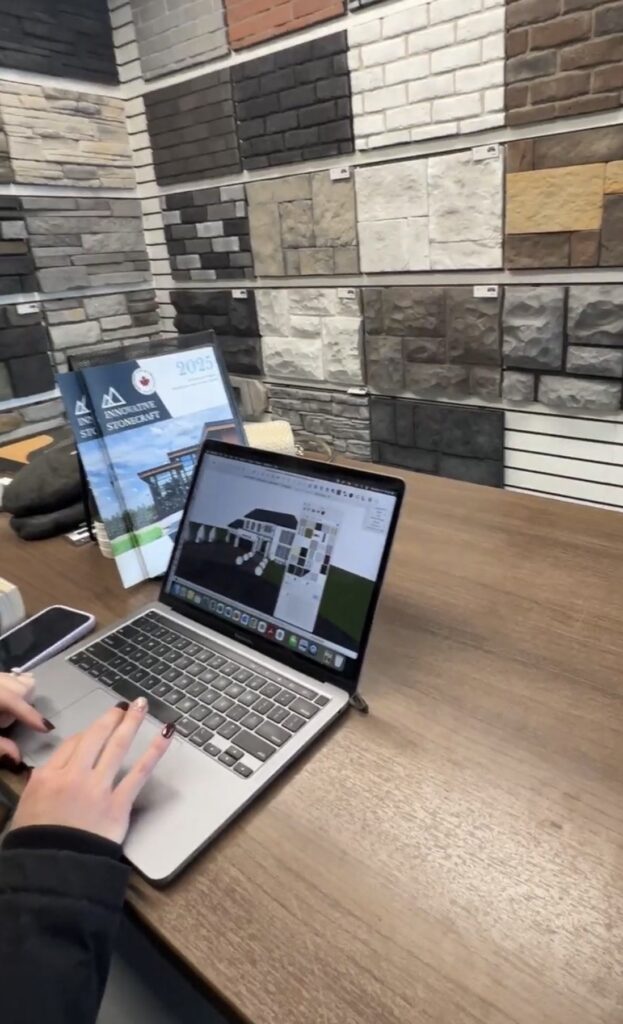
As clients make selections, our design team works directly with suppliers to gather real pricing on real products.
That process involves meeting with suppliers, reviewing options, requesting pricing, waiting for supplier/vendor pricing, entering everything into Buildertrend, getting client approvals, and sometimes starting the entire process over again when selections change.
And that’s just for one category.
Now repeat that process for plumbing fixtures, lighting, tile, flooring, cabinetry, appliances, countertops, hardware, mirrors, wallpaper, and exterior finishes.
This is why our clients know what their selections cost before construction even starts.
2. The Actual Fixed Pricing Phase
Once the final design presentation is complete, selections are finalized, and we confirm there are no more design changes, then we begin the fixed pricing phase.
This is where the entire project gets fully priced from top to bottom.
That includes trade bid requests, supplier quotes, answering RFIs, reviewing scopes, confirming quantities, checking specifications, coordinating allowances, and compiling everything into a 400-line-item spreadsheet that eventually becomes one fixed price.
That fixed price doesn’t magically appear. It’s the result of months of design decisions, coordination, documentation, pricing, revisions, and confirmations.
The Design Phase Creates Certainty
The design phase can feel long. We get it.
By the time most people commit to building, they’ve already spent years thinking about their future home. Emotionally, they’re ready to move in tomorrow.
But rushing design creates budget surprises, rushed decisions, regret, change orders, delays during construction, and unnecessary stress.
A thorough design phase creates the opposite: confidence, accurate pricing, smoother construction, fewer surprises, and a home that truly feels intentional.
The goal isn’t just to build a beautiful home. The goal is to build a home where you don’t spend the next 15 years saying: “I wish we would’ve thought of that earlier.”
Thinking About Building a Custom Home?
Before you start designing, make sure you understand the process, timelines, pricing, and common mistakes that catch people off guard.
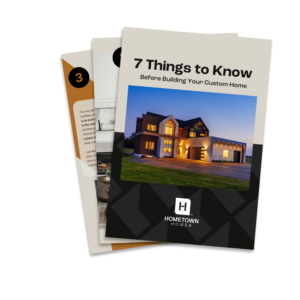
Download our free eBook: 7 Things to Know Before Building a Custom Home
It’ll help you start your project with realistic expectations, more confidence, and far fewer “wait… what?” moments later.
Grab your Free eBook:
“7 Things to Know Before Building Your Custom Home”
Because the more you know, the less chance you’ll cry into your wine over surprise
costs.