You can already picture it.
Coffee on the deck. No neighbours five feet away. Quiet mornings. Big skies. Room to breathe.
Acreage life looks peaceful from the outside. But what most people don’t see are the decisions behind it. The infrastructure. The planning. The costs hiding under the surface.
Here’s the truth we’ve learned firsthand (and before we scare you, just know that we wouldn’t change it for the world):
Acreage living is incredible, but it only works when you understand the land as well as the house.
If you get that part right, the rest becomes exciting instead of overwhelming.
Let’s break it down.
How Far Out is Too Far?
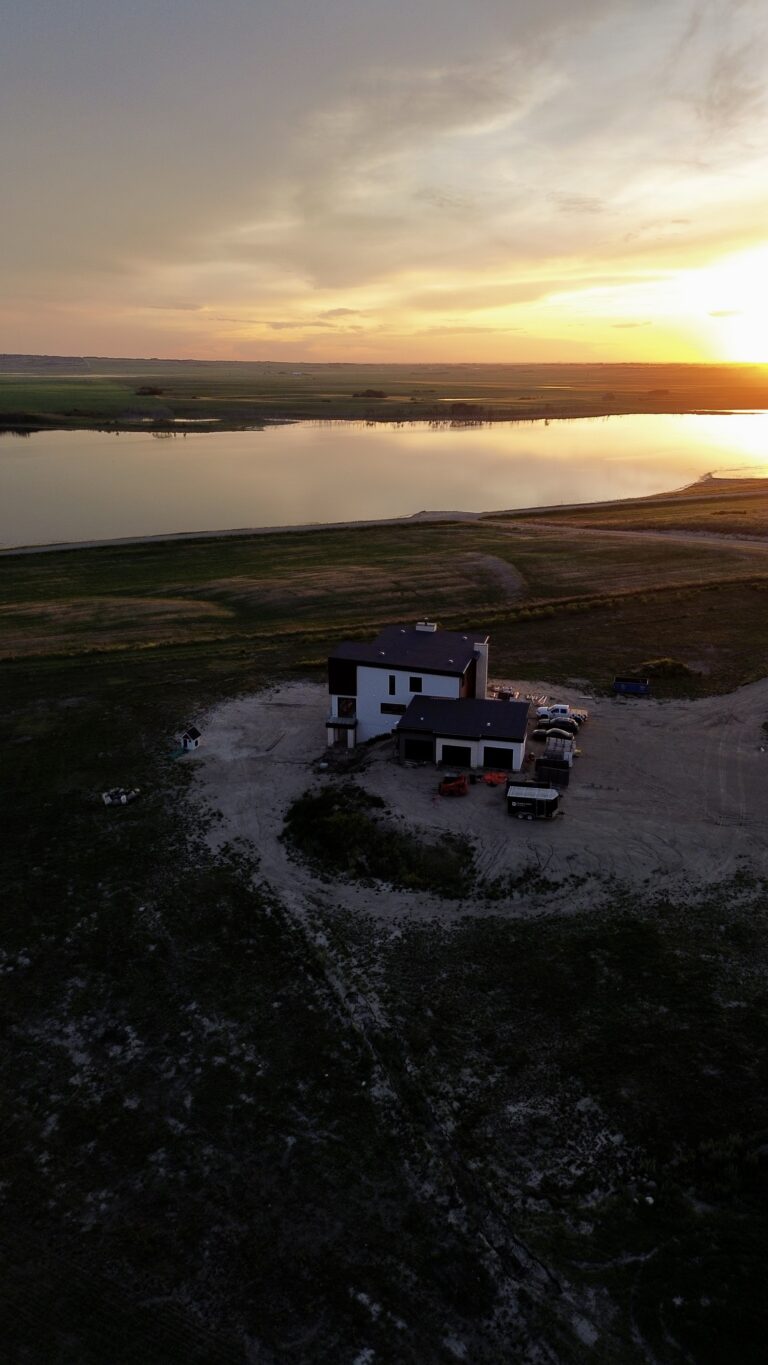
When you stand on a beautiful piece of land at sunset, distance feels irrelevant. But acreage life is lived on random Tuesdays in February, not just golden evenings in July.
Start with your routine.
Where do you work?
How often do you drive into the city?
Do you have kids or are they part of your future plans? Think about their school and activities.
Ten minutes outside the city feels very different than forty minutes when the roads are icy and it’s still dark at 8 a.m.
Then there’s the road itself. Paved or gravel?
We both grew up on farms so driving gravel feels normal to us. Oddly, it feels like home. But gravel also means dust, rock chips, and regular car washes.
Before you commit to a location, drive it during rush hour. Drive it in winter. Acreage life should support your day-to-day rhythm, not slowly wear you down.
How Much Land Do You Actually Need?
This all depends on how big of a challenge you’re up for.
You can purchase:
0.5 acres in an acreage residential development
3-5 acres with some space between neighbours
160+ of open fields
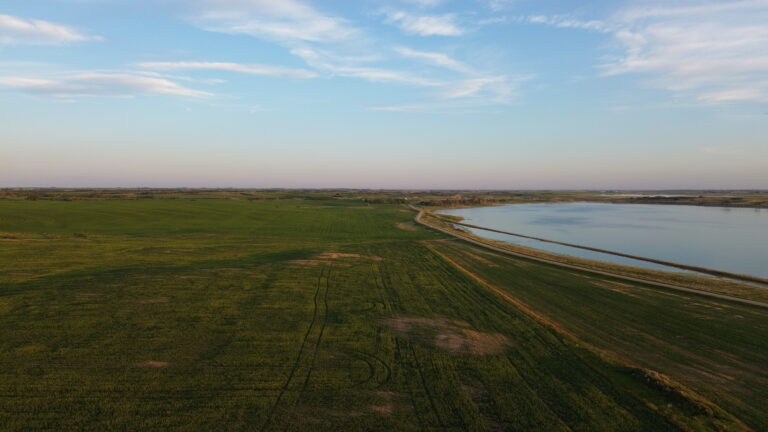
We lucked out many years ago and purchased a hidden gem of 162 acres of bare farmland, just 15 minutes from the city (to some folks, that’s far, far away). The privacy is incredible. The freedom is unmatched. The amount of work is not small.
More land gives you options. It also gives you responsibility.
Ask yourself:
Do you want total privacy or some community?
Are animals in your plan?
Do you want room for future shops or outbuildings?
How much yard work do you honestly enjoy?
There’s a big difference between owning land and managing land.
Utilities: The Things That Can Wreck Your Budget
We’re all about keeping it simple, yet ensuring no detail is missed. That’s why we’ve created our 3-Step System:
Utilities are where acreage dreams get serious.
Before we bought our quarter, we inquired with SaskEnergy about bringing in natural gas. The quote came back at $75,000 (that was in 2015). We automatically knew we’d have to come up with alternative heating sources and didn’t even bother getting a revised quote in 2023 when we actually started building (our guess is it would be $130,000 by now).
Before making an offer to purchase acreage land, confirm:
Power
Is it already at the property line? If not, what will it cost to bring it in?
And think long-term. We installed a 400-amp service because we knew we may need it. Upgrading later would be expensive and disruptive.
Gas
Is natural gas available? If propane is required, where will the tank sit?
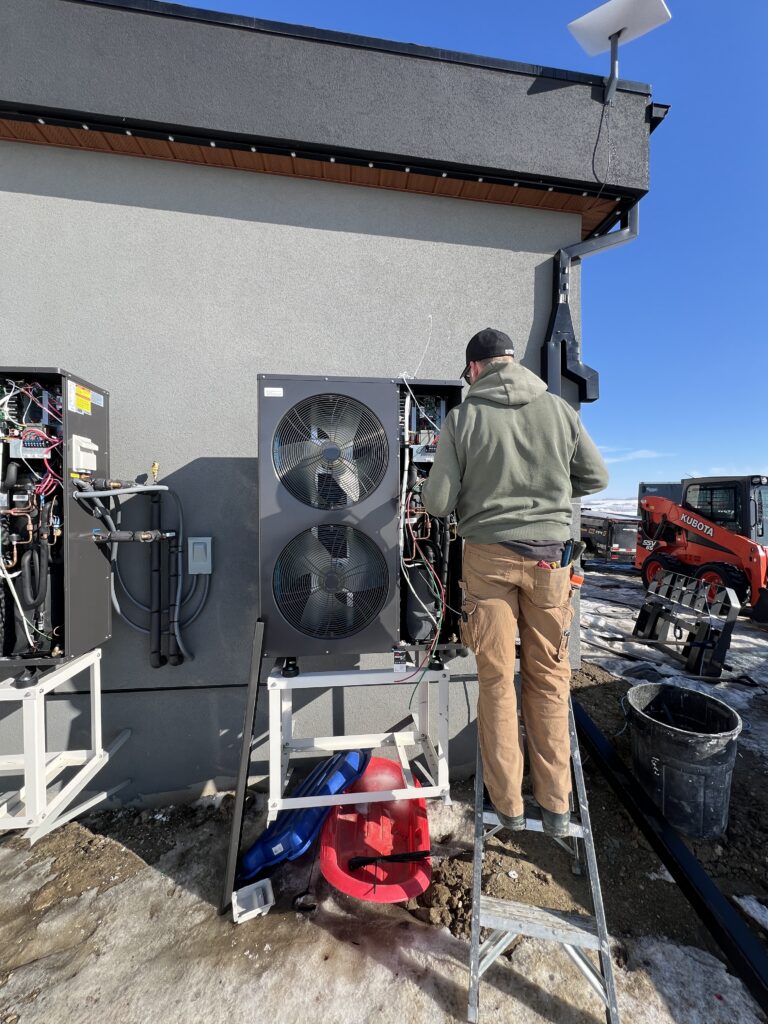
Water
Is it city water or a well?
We both grew up on well water and are scarred for life from orange bath tubs and clogged faucets. So for our forever home, city water was important to us. That being said, reverse osmosis systems have improved significantly, but well performance varies by location. Sometimes you don’t know the full story until testing begins to know whether a well can even happen.
Septic
In most developments, you will require a mound system. Costs can range from $25,000 to $80,000 depending on home size and local regulations.
On our quarter, we were able to install a pump-out system because we are the only residence.
That single difference can shift your budget dramatically. This is research you want to do early, not after your plans are finalized.
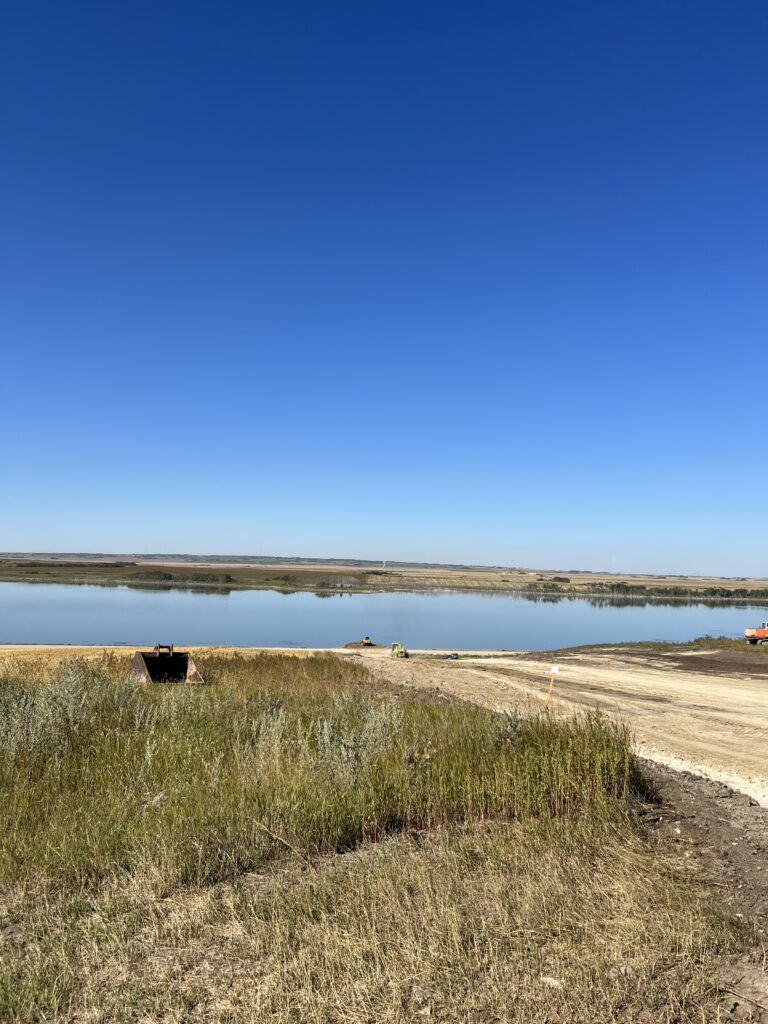
Driveways, Approaches & Road Allowances
A beautiful lot without access is just a field (and that’s exactly what we bought).
Does the property already have an approved approach? Is there a driveway in place?
Not only did we have to build a driveway, but we had to build a road allowance in order to get to our driveway, and that needed to be done to RM standards, including grading, base work, culverts and ditches. And then there were surprise veins of rocks, rocks, and more rocks (we now have a mountain of rocks. Who wants one?). It was a significant investment before the house even began.
Infrastructure rarely shows up in listing photos, but it always shows up in your budget.
Trees, Land Prep & What You’re Actually Building On
Some acreages come with mature shelter belts. Others are wide open farmland.
If there are trees, do they need clearing before construction?
If there are none, are you prepared to plant and wait years for growth? And by years, I mean decades, for us, anyway (have you seen our Instagram posts about our 10-year-old trees? Cue the tears).
Land preparation may include:
Excavation and leveling
Soil correction
Drainage work
Clearing brush
It is not the glamorous part of building, but it directly impacts how your home performs long-term.

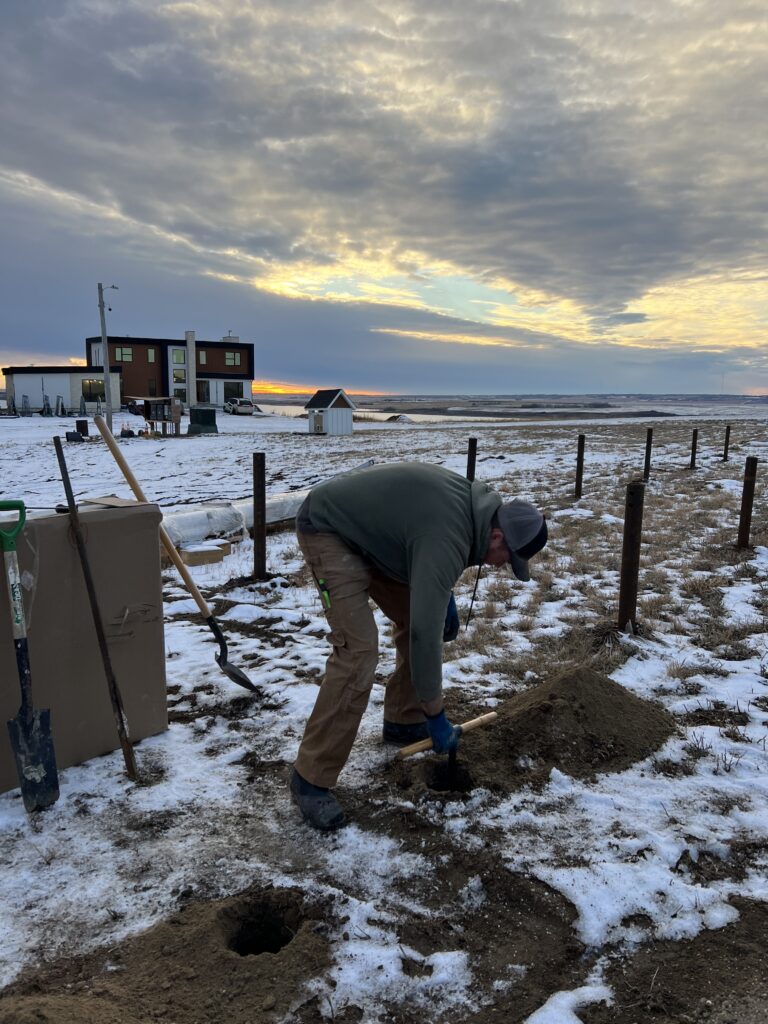
Soil Conditions & Foundation Choices
Not all land behaves the same.
Sandy soil can require helical piles instead of a standard foundation. That increases stability, but also increases cost.
A proper geotechnical review early in the process protects you from re-designing mid project.
Your home should respond to the land. The land should not be forced to accommodate the wrong design.
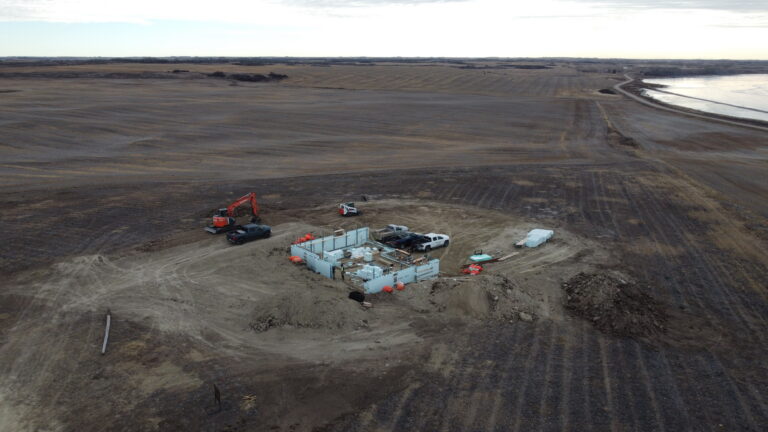
Choosing the Right Home for the Site
If you want a walk-out basement, you need slope. Flat land limits that option unless you plan to move a lot of dirt (and as we learned with our driveway, moving dirt equals big dollars).
A bungalow, two-storey, or walk-out all interact differently with grade, drainage, and sun exposure and overall views.
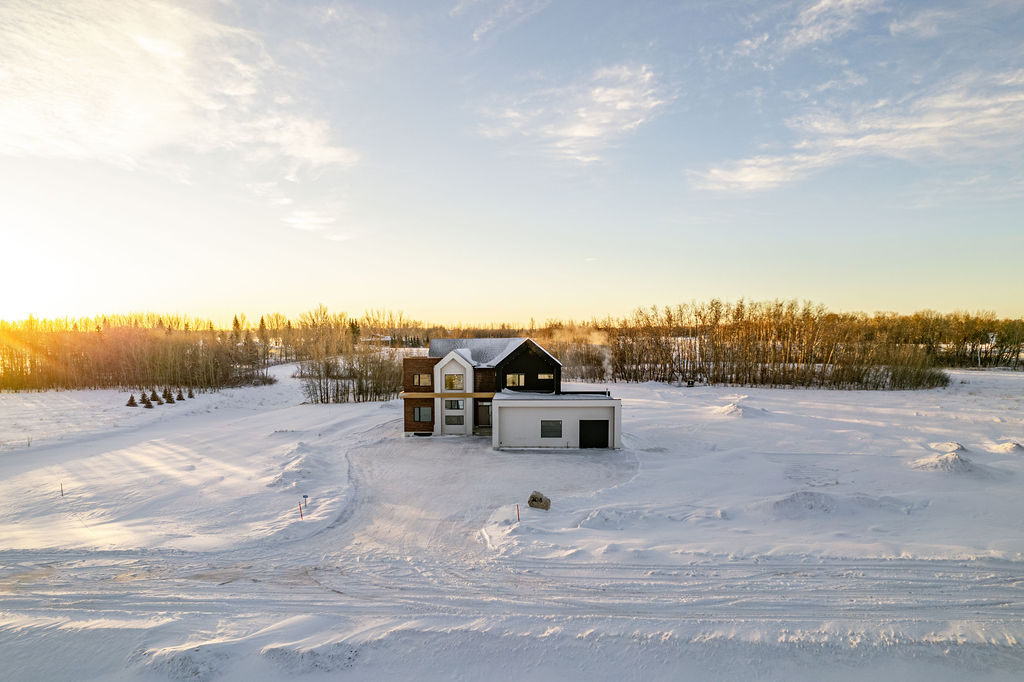
One of the greatest advantages of acreage living is orientation. You can position your home intentionally.
Think about:
Where does the sun rise?
Where does it set?
Where do prevailing winds come from? Spoiler alert: Wind comes from all directions when you’re up on a hill with no trees around like us.
On city lots, you rarely control that. On an acreage, you do.
Development Rules & Restrictions
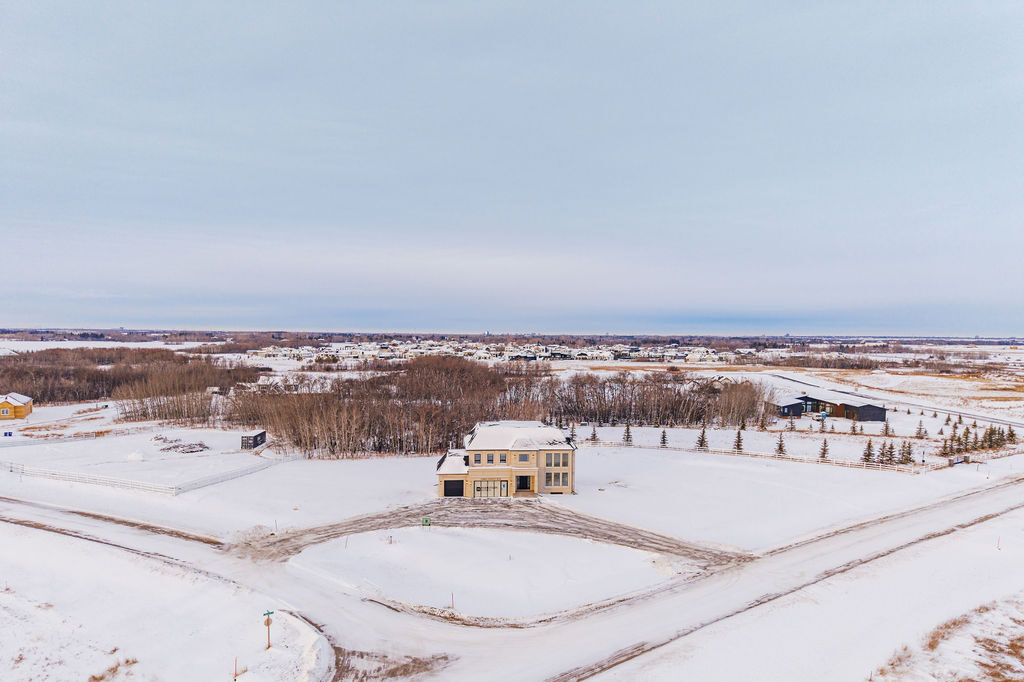
If you’re buying in a country residential development, review the architectural guidelines carefully.
They may dictate:
Minimum square footage
Roof pitch minimums
Exterior materials
Required stone
Approved colour palettes
Some developments restrict animals or recreational vehicles.
Make sure your vision aligns with the rules before you fall in love with a lot.
The Lifestyle Shift
Acreage living comes with equipment.
You will likely need:
A riding mower or a skid-steer (most recommended according to Kurt)
Snow removal equipment
Storage for fuel and tools
Garage space disappears quickly.
You may also need fencing for pets or animals. Maybe a dog run. Maybe a full yard fence. Maybe you explore geofencing.
And if you live far enough out, grocery trips become strategic. A second fridge or freezer often makes practical sense.
This is not a downside. It’s simply part of the rhythm.
The Timeline No One Mentions
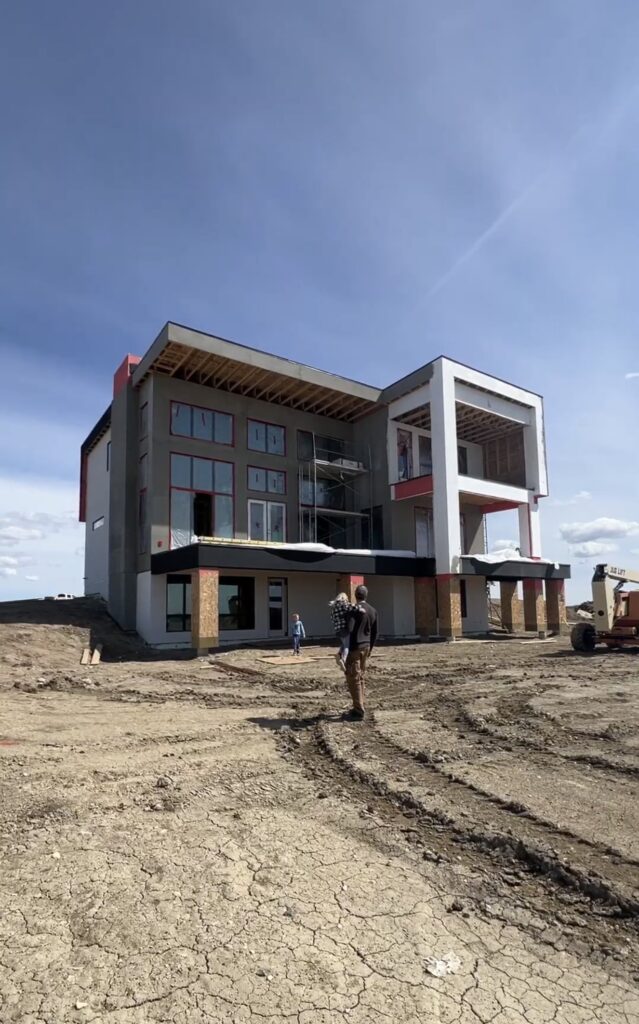
Designing, building and landscaping on an acreage does not happen overnight.
Between design, approvals, construction, and landscaping, it can easily stretch into a multi-year journey.
The house may go up within a year. Landscaping and full yard development often happens in phases.
When you expect that upfront, the process feels intentional instead of frustrating.
Final Thoughts
Acreage life offers something special. Space. Privacy. Control. Room to build a home that truly fits your lifestyle.
But it rewards people who plan ahead. The sunsets are better when you can see them.
When you understand the land as well as the house, acreage living becomes an opportunity instead of a gamble.
If acreage life is on your radar, start by educating yourself and ask yourself these tough questions. Talk to others who live on an acreage. And don’t be shy to reach out to us as we’re still in our acreage development journey.
If you’ve done all your research, purchased your land and know you’re meant for acreage life, download our free guide “The Ultimate Guide to Choosing a Home Builder” before you start taking the first step in talking to designers and builders.


Learn more about what else to look for in a builder by downloading our Free Guide:
“The Ultimate Guide to Choosing a Home Builder”